
For the first time in the World Cup’s history, the champions won’t just lift the trophy and collect gold medals. They’ll walk away with a championship ring a tradition borrowed straight from the NFL, NBA and MLB, arriving on football’s biggest stage as the tournament comes to North America.
FIFA confirmed the move on Friday. When Spain and Argentina meet in the final at New York New Jersey Stadium on Sunday, July 19, the winners become the first team in the tournament’s history to receive one.
How the rings break down
FIFA is producing exactly 2,026 rings individually numbered, a nod to the year. The split:
- 30 go to the winning team’s players and staff
- 1,996 go on sale to the public as officially licensed merchandise
Each ring carries the World Cup trophy on one face, with the other side customised to the winning nation’s identity. Every one is numbered, custom-fitted, and shipped with a certificate of authenticity.
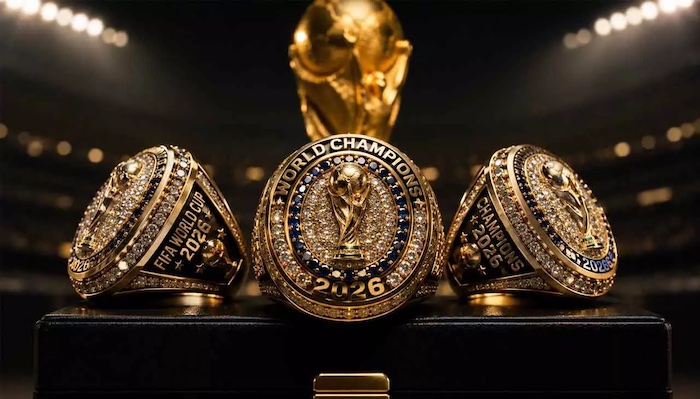
The handover has two stages
There’s a detail here that mirrors how American leagues do it. Immediately after the final whistle, the winning captain and head coach receive temporary rings during the celebrations. The real 30 are made later each one sized to its specific recipient and presented at a separate ceremony down the line.
That’s lifted directly from NFL and NBA practice, where the rings are designed and fitted in the months after the title, not handed out on the field.
Why FIFA is doing this now
The timing isn’t an accident. This is the first World Cup hosted primarily in the United States since 1994, co-staged with Canada and Mexico, and the first 48-team edition. Importing the most recognisable trophy-culture tradition in American sport is FIFA meeting the host market where it lives and, not incidentally, opening a new licensed-merchandise line to nearly 2,000 buyers at what will not be a small price.
The purists will grumble that football already had its symbol and didn’t need a borrowed one. The counter is simple: nobody’s replacing the trophy. The ring is an addition, and the collectible run means a fan in Kansas City can own the same design, differently numbered, as a World Cup winner. Whether that’s dilution or democratization is the argument that’ll play out in the replies.
What happens Sunday
Whoever wins — Messi chasing a second star, or Yamal’s Spain announcing the next era becomes the answer to a trivia question that didn’t exist a week ago: the first World Cup champions to wear the ring.

