
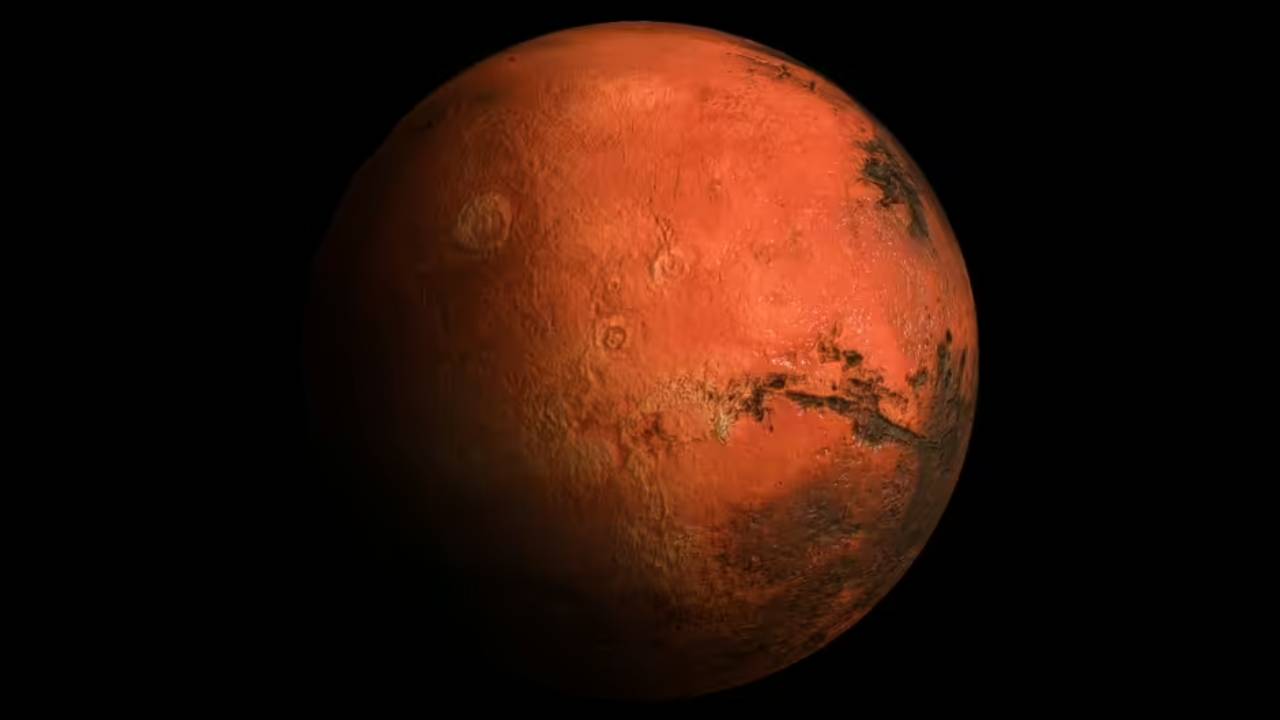
A groundbreaking space exploration milestone has completely rewritten what humanity knows about the red planet and the potential for life on Mars. British scientists at the University of Oxford have uncovered definitive geological evidence proving that massive rivers of molten rock once surged directly beneath the Martian surface. This unexpected magmatic network fundamentally changes long-held scientific assumptions, suggesting the planet possessed highly dynamic, chemical-recycling environments capable of sustaining alien organisms for millions of years.
The incredible data shakes the core of modern planetary science. Previously, astrobiologists systematically ruled out worlds that lacked active tectonic plates as potential habitats for living entities. However, this new data demonstrates that complex, long-lived subterranean systems can thrive without shifting continents, opening up a vast new array of cosmic destinations where extraterrestrial organisms might currently exist or leave historical fossils.
The Oxford Seismic Breakthrough
The historic discovery was achieved by analyzing advanced seismic data captured by NASA’s InSight lander, which recorded deep vibrational waves generated by space meteorite impacts and powerful marsquakes. Published officially in Nature Astronomy, the comprehensive study maps out a distinct geological boundary buried roughly 15 miles directly beneath the planet’s outer crust. Researchers concluded this deep layer was created by ancient magma expanding horizontally across thousands of miles.
Prior to this revelation, planetary geologists believed that Martian volcanoes were fed by isolated, self-contained magma pockets. The proof of an interconnected, planet-wide magmatic system shows Mars had the internal heat engine necessary to recycle crucial chemical elements, sustain a thick atmosphere, and maintain flowing surface oceans without needing Earth-style plate tectonics.
Unlocking Billions in Space Mineral Wealth
Beyond looking for ancient microscopic life on Mars, the study highlights massive implications for future human survival and economic colonization. Lead study author Dr. Tobermory Mackay-Champion explained that these sprawling magmatic systems are globally known to generate massive, concentrated heavy metal deposits. Consequently, the red planet likely holds far more accessible, near-surface mineral wealth than space agencies previously estimated.
This newly recognized resource bounty provides a massive logistical boost for imminent crewed missions, deep-space mining initiatives, and the long-term establishment of permanent human colonies. Future astronauts will likely be able to mine essential raw materials directly from the Martian crust rather than hauling expensive supplies across the solar system from Earth.
Are We Alone in the Universe?
This astronomical revelation forces scientists to entirely rethink how they look for habitable biosignatures across the deep universe. Co-author Associate Professor Jon Wade emphasized that if Mars could successfully forge a complex, chemically active crust without plate tectonics, the basic criteria for planetary habitability are far broader than once believed.
Countless distant exoplanets that were previously dismissed by astronomers due to their small size or lack of tectonic tremors are now back on the map as prime targets in the search for alien biology. As satellite telescopes peer deeper into far-off star systems, this foundational shift in planetary physics suggests that life in the cosmos may be the rule rather than a rare exception.

